What's TPO roofing, anyway, and why should I even care?
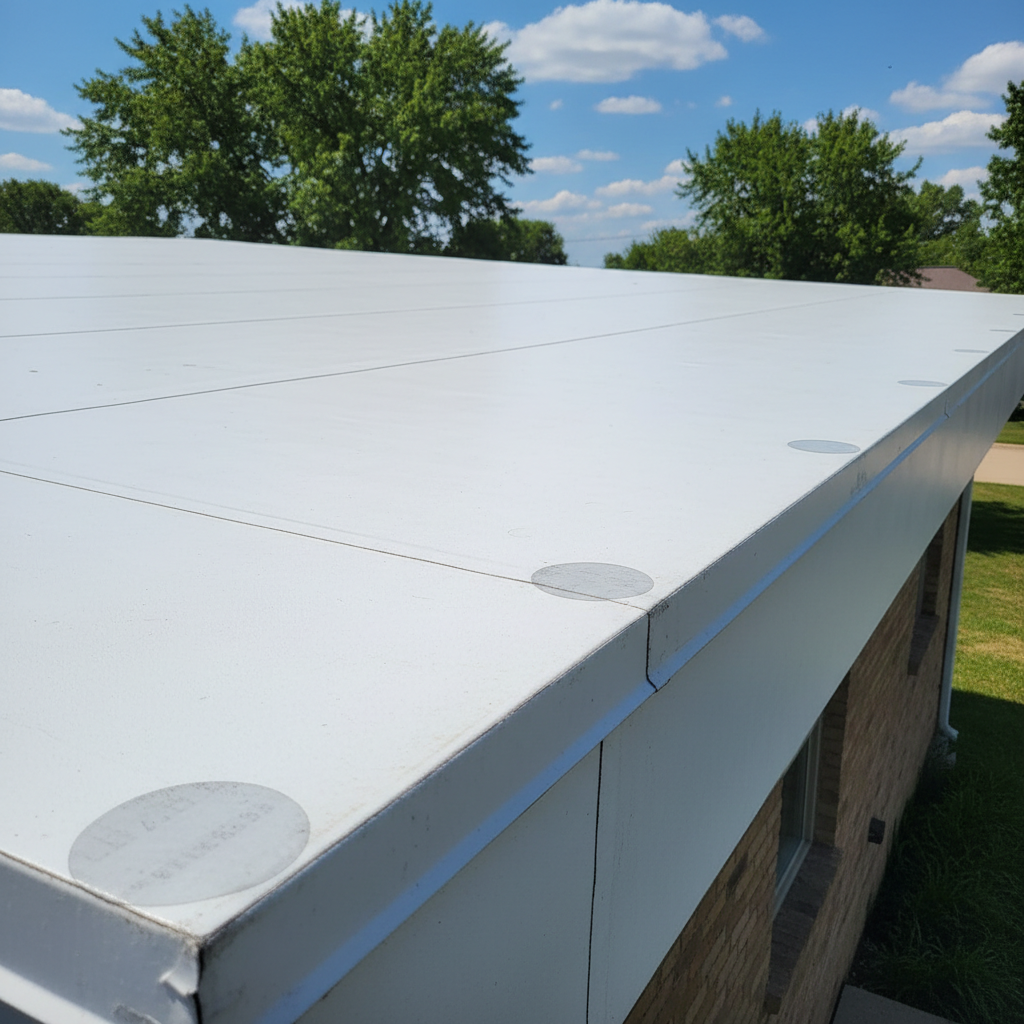
Alright, let's just cut to the chase. TPO stands for Thermoplastic Polyolefin. It's what we call a single-ply membrane – basically, one layer of synthetic material that gets unrolled and attached right onto your commercial roof deck. Imagine a really big, flexible sheet covering your whole roof. So, why should *you* care? Well, for commercial buildings, especially those with flat or low-slope roofs that you see all over Derby, TPO really pulls its weight. It's known for being super durable, energy-efficient, and pretty darn cost-effective over the long haul. This isn't some brand-new gadget; it's been around for decades and has definitely proven itself.
How long does a TPO roof typically hold up in our Kansas weather?
That's a crucial question, especially with the wild weather swings we get here in Kansas. A TPO roof, if it's installed correctly and kept up well, can easily last 20 to 30 years. Sometimes even longer! Now, "installed correctly" is the key phrase there, wouldn't you agree? If folks cut corners or don't do it right, you'll definitely see problems much sooner. Our Derby summers, with those intense UV rays, and the hailstorms that pop up? They can be tough on any roof. But TPO is actually built to handle that. Its white or light-colored surface reflects a ton of sunlight, which helps it last longer and keeps your building cooler. Plus, the seams are heat-welded, making them incredibly strong against wind and water – a real bonus when those Kansas winds start howling.
Is TPO really as energy-efficient as everyone says?
Oh, absolutely it is. This isn't just marketing fluff; it's a genuine fact. Most TPO membranes are light-colored, usually white or light gray. That means they reflect a huge amount of the sun's ultraviolet (UV) rays and infrared radiation. Instead of soaking up all that heat like a black asphalt roof would, a TPO roof sends it right back into the atmosphere. What's that mean for your business? Lower cooling costs, pure and simple. Your HVAC system won't have to work nearly as hard to keep your building comfortable during those scorching Derby summers. I've personally seen businesses slash their energy bills significantly after switching to TPO. It's a smart move if you're looking to save on operational expenses.
What kind of maintenance does a TPO roof need? Is it a high-maintenance headache?
Compared to some other commercial roofing systems, TPO is pretty low-maintenance. It's not "no maintenance," though – no roof is. You'll want to get it inspected at least once a year, and definitely after any big storm. We're talking about checking for punctures from falling debris, making sure the seams are still solid, and clearing off any standing water or built-up dirt. Debris like leaves or branches can trap moisture against the membrane, and that's never a good thing. For businesses near the old railway lines, where you get a lot of fine dust and grit, keeping it clean is even more vital. A simple cleaning with a power washer (on a low setting, don't go crazy) or just a good scrub can extend its life and help it keep reflecting heat. It's about being proactive, not waiting for a problem.
Can TPO be repaired, or do I have to replace the whole thing if there's damage?
Good news here: TPO is very repairable. That's one of its big selling points. If you get a puncture from a falling branch, or a small tear from something blowing across the roof, a skilled technician can usually patch it up pretty easily. They'll clean the area, cut a piece of TPO membrane to size, and then heat-weld it right over the damaged spot. Because the material is thermoplastic, it melts and fuses together, creating a seamless, watertight bond. This means you don't have to rip out and replace a whole section, which saves you a lot of time and money. Of course, if the damage is widespread or the roof is simply at the end of its life, then replacement is the way to go. But for localized issues, repairs are definitely an option.
Is TPO a good choice for all types of commercial buildings, or does it have limitations?
TPO is incredibly versatile, and it's a fantastic option for most commercial and industrial buildings that have flat or low-slope roofs. Warehouses, retail stores, office buildings, manufacturing plants – you name it, TPO can probably cover it. It's lightweight, so it doesn't put a huge strain on your building's structure, which is a plus for older buildings. The main limitation isn't really the building type, but rather the slope. TPO isn't typically used on steep-slope roofs, like those on residential homes, because it's designed for water to drain off slowly. For those kinds of applications, you'd be looking at asphalt shingles or metal roofing. But for the vast majority of commercial properties in Derby, TPO is a very strong contender.
What's the installation process like for a TPO roof? How disruptive is it?
The installation process for a TPO roof can vary a bit depending on your existing roof and the size of the building, but generally, it's pretty efficient. First, we'll strip off the old roof if necessary, or sometimes we can go right over an existing one if it's in good shape and code allows. Then, we'll prepare the deck, making sure it's clean and smooth. Insulation boards often go in next, which really boosts that energy efficiency we talked about. Finally, the TPO membrane gets rolled out. We'll either mechanically fasten it, fully adhere it with adhesive, or use a combination of both, depending on the specific project and wind uplift requirements. The seams are then heat-welded together, creating that monolithic, watertight barrier. We do our best to minimize disruption to your business operations. We'll work with you on scheduling, and our crew at Derby Roofing Company is always mindful of your property and your customers. Our goal is to get in, get the job done right, and get out, leaving you with a solid new roof.
How does TPO compare in cost to other commercial roofing options?
When you're just looking at the upfront cost, TPO usually lands somewhere in the middle of the pack for commercial roofing materials. It's often more affordable than some premium options like PVC or certain metal systems, but it might be a bit more than a modified bitumen roof. However, you've really got to look at the whole picture – the "lifecycle cost." Because TPO is so durable, energy-efficient, and relatively easy to repair, its long-term value is excellent. Those energy savings really add up over two or three decades. Plus, its longevity means you're replacing your roof less often. So, while the initial sticker price is important, TPO often wins out when you consider what you'll spend over the entire lifespan of the roof. It's a solid investment that pays dividends in reduced energy bills and fewer headaches down the road.